
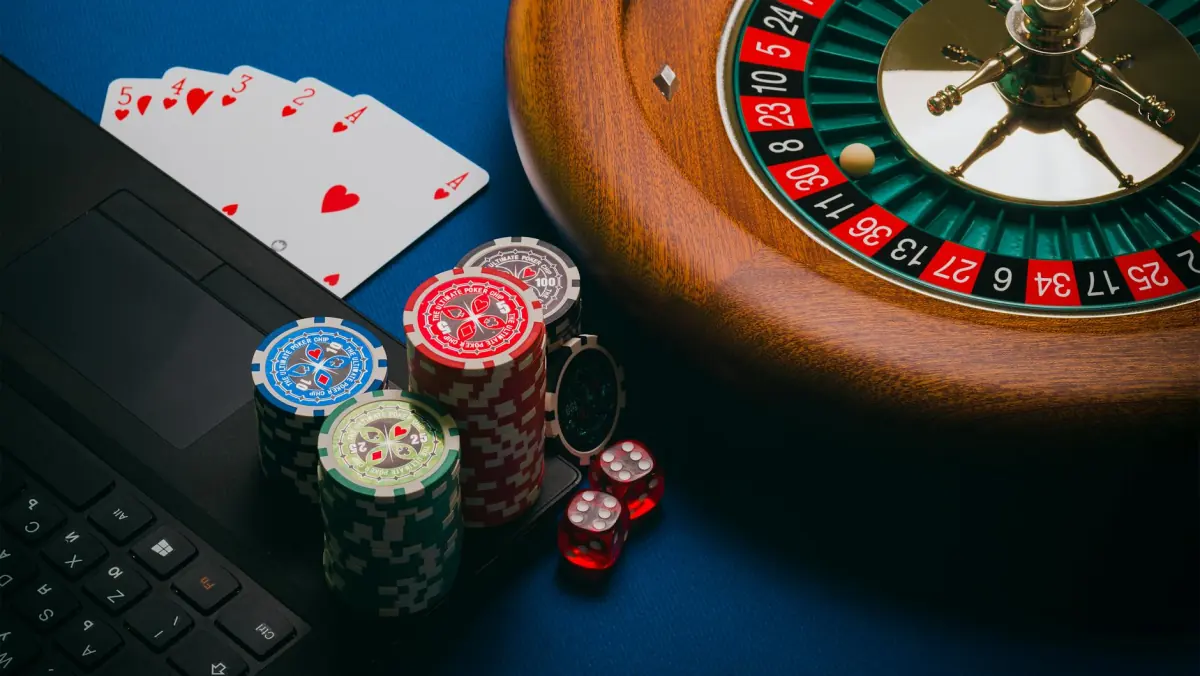
Most slot players do not stay locked in because they expect to beat the machine in any long-term mathematical sense. They stay because modern digital slots are built to keep the next spin feeling emotionally alive. The core mechanism is not just payout size. It is the combination of unpredictable rewards, engineered near-misses, high-speed spin cycles, and sensory feedback that turns a gambling session into a trance-like rhythm. Once that rhythm takes hold, the player is no longer simply evaluating wins and losses. They are reacting to momentum, interruption, frustration, relief, and the stubborn feeling that the machine is about to give something back. That is the real hook, and it explains why so many players chase the zone long after the session has stopped making financial sense.
The Biological Blueprint: Why the Brain Wants Another Spin
Digital slots exploit a basic feature of human learning: the brain does not only react to rewards, it reacts strongly to the possibility of reward. That distinction matters. A fully dead losing spin is easy to classify and dismiss. A spin that feels close, ambiguous, exciting, or unfinished does something different. It creates anticipation, then tension, then an urge to resolve that tension immediately.
Studies of gambling behavior have repeatedly found that players tend to launch the next spin faster after a near-miss than after an ordinary loss. That matters because it shows the event is not being processed like a clean defeat. It is being processed as a provocation. The machine has effectively told the brain, “you were close enough that another attempt is justified.” This shortens the pause where reflection might happen. Instead of asking whether the session is worth continuing, the player acts before that question fully forms.
In heavier gamblers, brain imaging has shown overlap between the circuitry activated by actual wins and the circuitry activated by near-misses, especially in reward-related regions such as the ventral striatum. That does not mean a near-miss is equal to a win. It means the machine does not need to pay in full to keep the reward system engaged. It only needs to keep it interested. For a product designed around volume and persistence, that is enough.
Variable Ratio Reinforcement: The Schedule That Refuses to Let Go
The most powerful engine behind slot persistence is variable ratio reinforcement. In plain language, rewards arrive unpredictably after an unknown number of responses. A player cannot know whether the next hit is one spin away or fifty. That uncertainty is not a side effect. It is the point. Behavioral psychology has long shown that variable ratio schedules produce high response rates and make stopping unusually difficult because there is no obvious signal that now is the rational moment to quit.
With fixed rewards, people adapt quickly. With unpredictable rewards, they keep checking. Slots turn that principle into a commercial system. Each spin resets hope. The player never gets a stable rhythm of reward and therefore never gets a stable rhythm of disengagement. The possibility of a hit remains permanently alive, even during long losing stretches.
That is why many players describe a slot session less as a sequence of discrete bets and more as a continuous state. The machine is not selling one outcome. It is selling access to uncertainty. That uncertainty is psychologically sticky because the next spin always feels like a live event rather than a repeat of the last one. When the interface allows 15 to 20 spins per minute, the reinforcement loop becomes dense enough that the player can rack up dozens of emotionally charged decisions in a very short period. The speed removes breathing room, and the unpredictability supplies the reason to keep going.
The Near-Miss Illusion: Why Almost Winning Feels Like Progress
Near-misses are one of the most important distortions in modern slot play because they feel directional. A plain loss says nothing. A near-miss says you are moving. Two jackpot symbols landing in view, with the third stopping just above or below the payline, creates the feeling that the outcome was not random noise but a narrowly failed attempt. Players often talk about being “one off,” “due,” or “all over it,” even when each spin is independent.
This reaction is not irrational in the way many outsiders assume. It grows from a deeply human habit of reading patterns through the lens of skill, adjustment, and progress. In skill-based activities, near-success often does mean improvement. If a dart lands just off the bullseye, the instinct to try again immediately makes sense. Slots borrow that emotional grammar even though the player has no corrective control over the result. The machine turns random output into what feels like a failed skill attempt.
Research summaries on near-miss frequency suggest that around a 30% rate can be especially effective at increasing the urge to continue compared with lower frequencies. That figure is revealing because it shows the goal is not endless frustration. Too many near-misses would feel fake or exhausting. Too few would not generate enough tension. The sweet spot is a level that keeps the player irritated, stimulated, and convinced that something meaningful is happening. The machine is not trying to make the player happy every spin. It is trying to keep them psychologically invested.
Virtual Reel Mapping: How Digital Slots Manufacture “Close Calls”
The old mental model of a slot machine assumes visible reels correspond directly to underlying probabilities. On many modern digital games, that is not how the experience is built. The displayed reels are often the theatrical layer, while the outcome is governed by software logic that can map virtual positions to a smaller visible space. That opens the door to creating more apparent near-wins than a player would expect from what they see on screen.
This is where virtual reel mapping matters. By weighting symbol distribution in the hidden structure of the game, designers can make high-value symbols appear to stop just out of reach more often than naive visual intuition would suggest. To the player, it looks as if the jackpot keeps brushing past. In reality, the sensation of being close can be engineered independently from any genuine increase in win probability.
That distinction is strategic. Once a player believes the machine is flirting with a payout, session logic changes. They stop thinking in terms of house edge and start thinking in terms of timing, momentum, or personal luck. This is why experienced gamblers who would never be fooled by obvious casino marketing can still get trapped by a machine. The manipulation does not announce itself as deception. It arrives disguised as atmosphere, pacing, and “one more shot” energy.
Losses Disguised as Wins: When the Machine Celebrates Your Decline
One of the most effective tricks in digital slots is the loss disguised as a win. This happens when a player wagers, for example, $1.00 and receives back a smaller amount, such as $0.30, but the machine responds with celebratory sound, visual animation, and reward-style feedback. Economically, the player lost money. Sensory-wise, the machine tells a different story.
That conflict matters because human judgment inside a fast session is not running on a spreadsheet. It is running on perception. If the machine regularly wraps net losses in winning cues, the player’s internal record of the session becomes unreliable. They remember action, noise, flashes, and mini-reinforcements rather than the steady drain of bankroll.
Physiological studies have found that these disguised wins can trigger elevated arousal compared with ordinary losses, including stronger skin conductance and heart-rate responses. In other words, the body reacts as if something more meaningful happened than the balance statement would indicate. Over time, that can create the dangerous impression that the session is “alive” and productive even while capital keeps dropping. This is not just cosmetic polish. It is a direct manipulation of how the player feels the session unfolding.
The Machine Zone: Speed, Flow, and the Collapse of Self-Awareness
Ask regular slot players about their deepest sessions and many will describe a state that has little to do with joy. It is closer to absorption. Time softens. External concerns recede. The session stops feeling like a chain of decisions and starts feeling like a sealed environment. This is often called the machine zone, and it explains why people can sit longer than they planned, spend more than they intended, and struggle to reconstruct the session clearly afterward.
High-velocity digital play is central to this state. At 15 to 20 spins per minute, there is little time for reflective thought between outcomes. The machine continuously supplies stimulus: movement, color, sound, micro-delays, anticipation arcs, and short recovery windows before the next event. Rational exit points get crowded out by continuity. The session does not ask the player to decide whether to continue in a calm, detached way. It nudges continuation by making stopping feel like an interruption of a live process.
That is why the zone is so misunderstood by non-players. Outsiders assume the attraction is simple greed. Often it is not. The attraction is the temporary escape into a highly managed loop where uncertainty, stimulation, and repetition crowd out everything else. The machine becomes a private weather system. For some players, that state is the product, and the occasional payout is merely the thing that keeps access to that state believable.
Why Near-Misses Speed Up Play Instead of Slowing It Down
A sharp gambler might assume a painful near-miss would force caution. In practice, it often does the opposite. Near-misses reduce the delay before the next spin because they create unfinished business. The player feels pulled toward immediate correction, even though there is nothing to correct. This is one of the most important behavior shifts in digital slot design because faster post-loss re-engagement means less time for bankroll awareness, less time for emotional reset, and more total wagers per session.
That acceleration also helps close the dopamine loop. If the machine can take frustration and quickly convert it into renewed action, it prevents disappointment from hardening into withdrawal. The player does not sit with the loss long enough to integrate it. They chase resolution instead. In effect, the machine teaches the player that the proper response to disappointment is instant recommitment.
Once that pattern is established, the session becomes self-feeding. Near-miss creates frustration. Frustration creates urgency. Urgency creates speed. Speed reduces reflection. Reduced reflection increases vulnerability to the next near-miss, disguised win, or random hit. This is why some players feel as if a session suddenly “gets away from them.” What they are really describing is a tightly linked set of behavioral triggers doing exactly what they were built to do.
What Sharp Players Should Actually Take From This
The useful lesson is not that slots are mysterious or unbeatable in some supernatural sense. It is that many of the strongest feelings inside a session are manufactured by design choices that have little to do with genuine progress. A near-miss does not prove you are circling a payout. A loud mini-hit does not mean the session is healthy. A fast, absorbing rhythm does not mean you are reading the machine well. It often means the machine is reading you well.
Players who understand this tend to make better strategic distinctions. They stop treating emotional intensity as information. They recognize that “hot” and “close” are often just names for states of heightened engagement. They become more suspicious of games that seem to produce constant cliff-edge outcomes, endless celebratory feedback on tiny returns, or a pace so fast that they stop tracking real spend.
That does not require moral panic or fake shock about gambling. The smarter angle is clarity. Modern digital slots are not merely random number generators with pretty art. They are behavioral environments. They combine reinforcement theory, perceptual design, pacing, and neurological triggers to maximize session persistence. Once you see that clearly, the machine loses some of its mystique. You may still choose to play, but you stop confusing engineered compulsion with authentic opportunity. For anyone serious about gambling culture, that is the line that matters most.